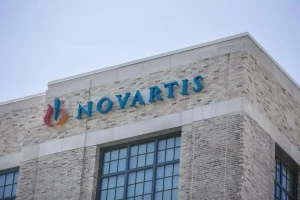
 Photographer: Scott Eisen/Bloomberg
I describe this decision-making process as one somewhat like being chromatographed in the medium of biotech reality! It was not the fastest to proof-of-concept [POC], nor the most unique. But it had the most exciting story; we held the most advanced agent in our chosen indication; the molecule had no known flaws of substance; and it was orally available–all properties most desirable by future partners. There was only one other such drug in clinical development and it was owned by a large pharma company. We believed we could be more nimble in decision making and execution. In addition, they were pursuing indications that we had rejected for business reasons, based on investor and pharma feedback. So, all we had to do was be correct in our hypothesis, flawless in execution and really lucky in the way things came out.
The Ziarco team, did in fact, perform very well. In the POC study involving 98 patients, ZPL-389 showed a clinically and statistically significant reduction of eczema after eight weeks as measured by the EASI (Eczema Area and Severity Index), reducing the EASI score by 50% compared to the 27% observed in the placebo arm. No significant side effects were seen. Ziarco had a potential important new drug to treat a significant dermal disease. They got the result that they had hoped for. Yet, there was still another big hurdle–finding a partner who could take ZPL-389 through regulatory approval and eventually to the market.
We engaged many potential partners over a long period of time, right from starting the company in 2012 up to the exclusivity period in 2016. Many would have been good partners, but fortune on all sides favored the tumblers falling into place with Novartis. There were many twists and turns, and it seemed likely that we would be acquired even earlier by a different party as we had good bids from several companies. I was constantly surprised by the many and various reasons–always nothing to do with Ziarco–why bidders fell by the wayside: changing internal priorities, a deal champion changing roles, etc. It proved to have been a good decision never to do contract research with the cheapest external providers, but only with those with good reputations. This was true not only for drug substance and product, but toxicology studies, clinical, advisors, market assessment, legal and tax. Those good providers racked up the bills but, in the sale process, quality names “ticked the box” and made diligence more straightforward–though exhausting!
On December 16, 2016, Novartis announced that it would acquire Ziarco. Besides ZPL-389, Novartis also got ZPL-521, a topical treatment for eczema, as well as an inhibitor of cPLA2, an early mediator in the arachidonic acid cascade, a key component of the inflammatory response. Terms of the deal were not announced. However, speculation is that the deal is worth up to $1 billion in a combination of upfront payments, milestones and royalties.
Mike and his team pulled off an amazing feat. They had a strong belief that the drugs that emanated from their Pfizer research work had value. But, converting that belief into reality was difficult. “The intensity of effort took me away almost completely from my family and other interests for almost five years and you get only one life.” Yet their belief was well-founded and their hard work was recognized with great success. Someday millions of eczema patients will be thankful for their efforts.
(The author is the former president of Pfizer global R&D and served as an advisor to Ziarco in 2013 and 2014.)
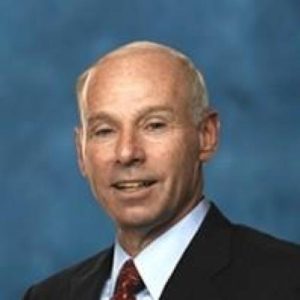 John LaMattina
I was the president of Pfizer Global Research and Development in 2007 where I led the efforts of more than 13,000 scientists and professionals in the United States, Europe, and Asia. I’ve received numerous awards including an Honorary Doctor of Science degree from the University of New Hampshire. I am also the author of “Drug Truths: Dispelling The Myths Of R&D” and the recently published Devalued And Distrusted: Can The Pharmaceutical Industry Restore Its Broken Image?” I am also a senior partner at PureTech Health.